How we helped Toggl
2.6x deal values from
paid while cutting
spend by 52%.
About Toggl

Elizabeth Thorn
Head of Marketing at Toggl
The challenge
Toggl had never built an in-house paid team. For years, they'd relied on external agencies to manage PPC, but the results had leadership questioning whether paid was even worth the investment.
When Elizabeth Thorn, Head of Marketing, assessed the situation, the picture wasn't encouraging. The previous agency was running Google Search ads with loose targeting, stale creative, and almost no experimentation. Basic account management tasks weren't getting done. Results were flat. And the internal conversation was shifting from "how do we make paid work?" to "does paid even work for us at all?"
"Our CRO wasn't sure if this was even a channel we needed to be investing in," Elizabeth recalls. "Switching agencies was more of a last-ditch effort to prove that paid could work for us."
Hiring a full-time paid specialist wasn't an option either—it's hard to justify headcount for a channel you can't prove is delivering. Toggl needed an agency that could come in, build something that actually produced pipeline, and give the team the evidence to defend the investment internally.
Our approach
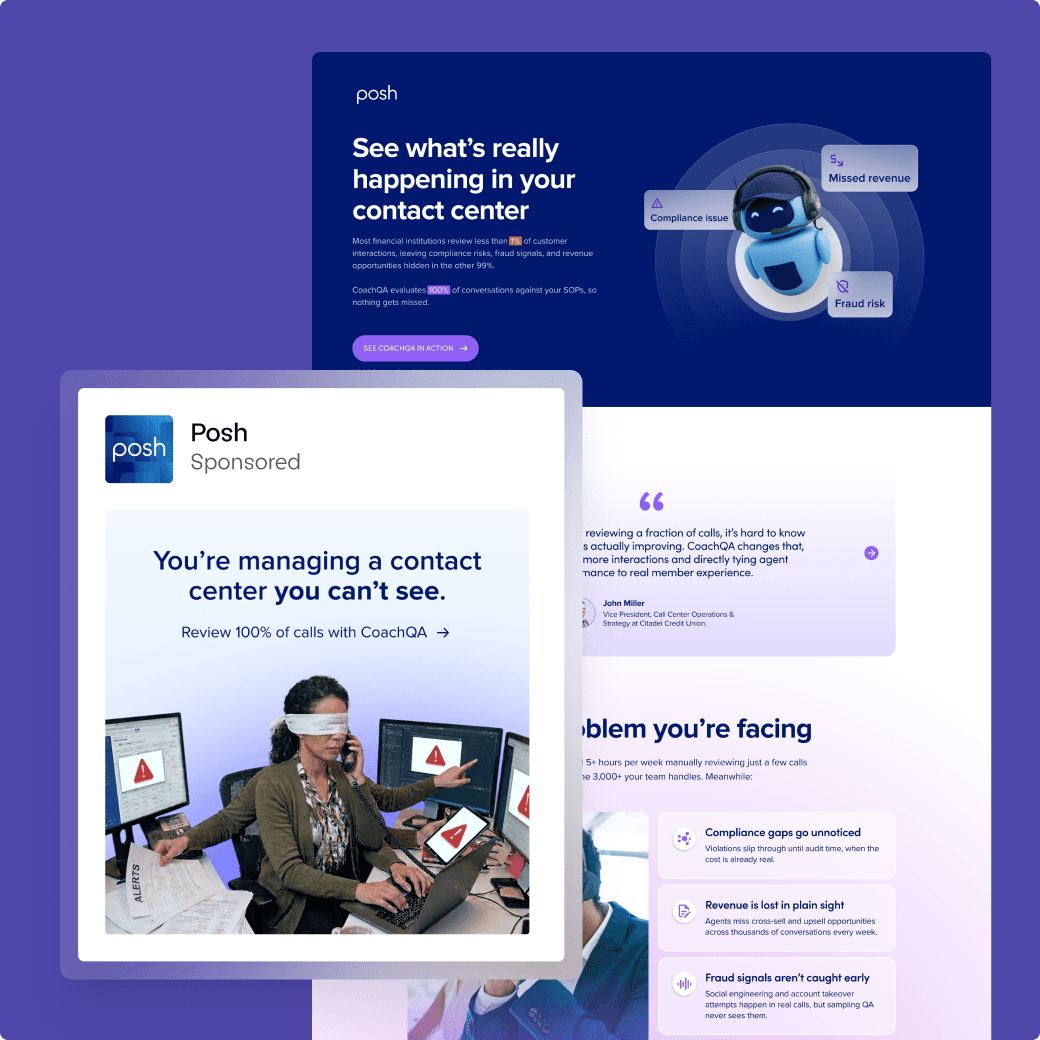
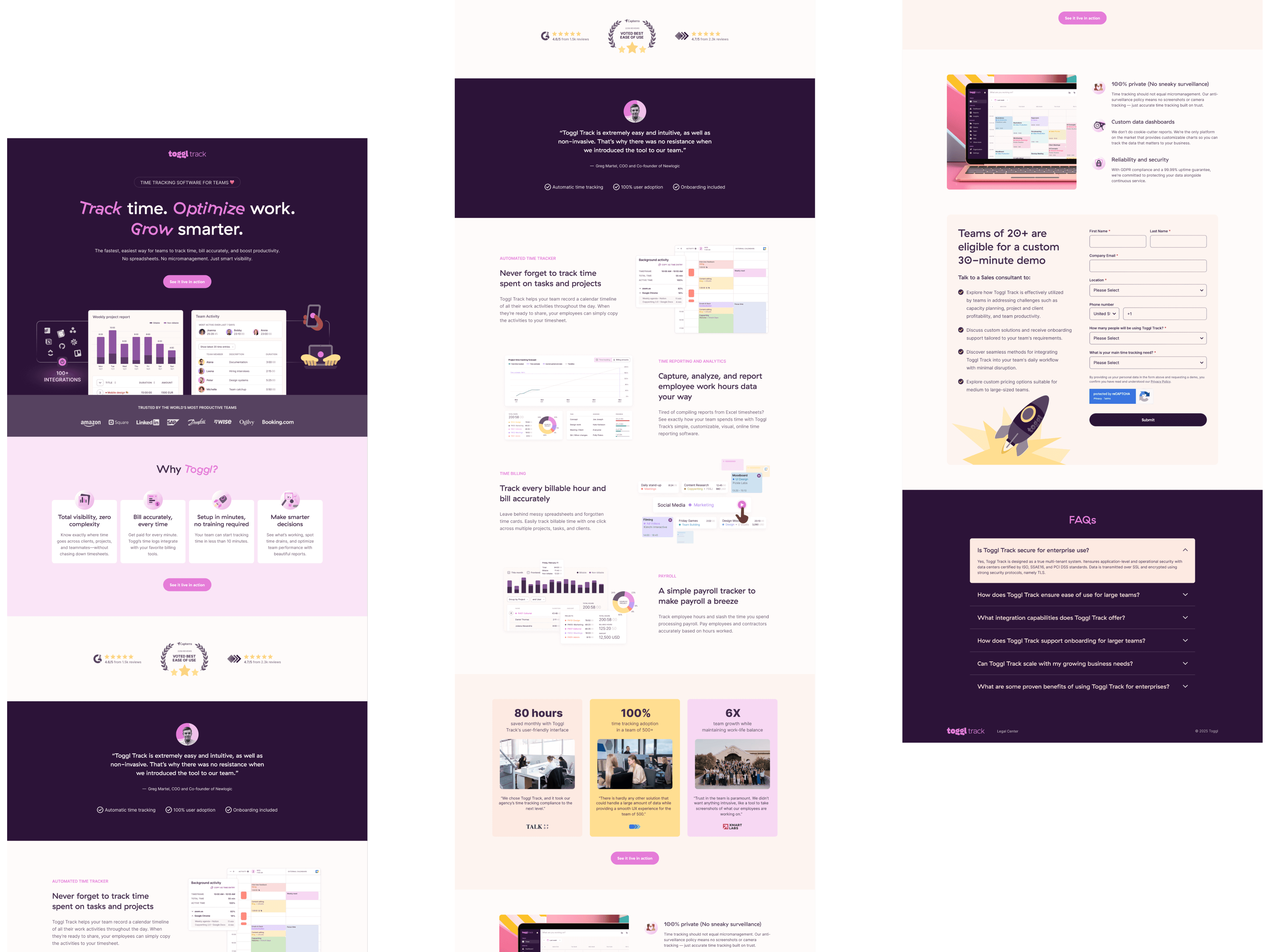
Toggl's previous paid setup was narrow—mostly Google Search, loose targeting, and little experimentation. We rebuilt the strategy from the ground up: tighter audience segmentation, refreshed creative and messaging, and expansion into LinkedIn, Reddit, and YouTube.
The combination of a more structured approach from our side and clearer strategic direction from Toggl's team meant we could move faster and hit harder, even on a reduced budget.
Here's how we did it.
Structured onboarding and tighter targeting
The previous agency had operated with loose audience definitions and vague direction. We started differently—with a thorough onboarding process to map Toggl's ICP, refine messaging, and define exactly which segments to target.
Elizabeth's team also came more prepared this time around, with clearer direction on who they were targeting and what messaging was working. The combination of that clarity from Toggl and tighter strategic execution from our team meant campaigns were built with precision from day one.
Elizabeth Thorn
Head of Marketing at Toggl






Want results like these for your B2B SaaS?
Get high-quality signups and demos that convert into customers and opportunities—all with paid marketing.
Creative experimentation and new channels
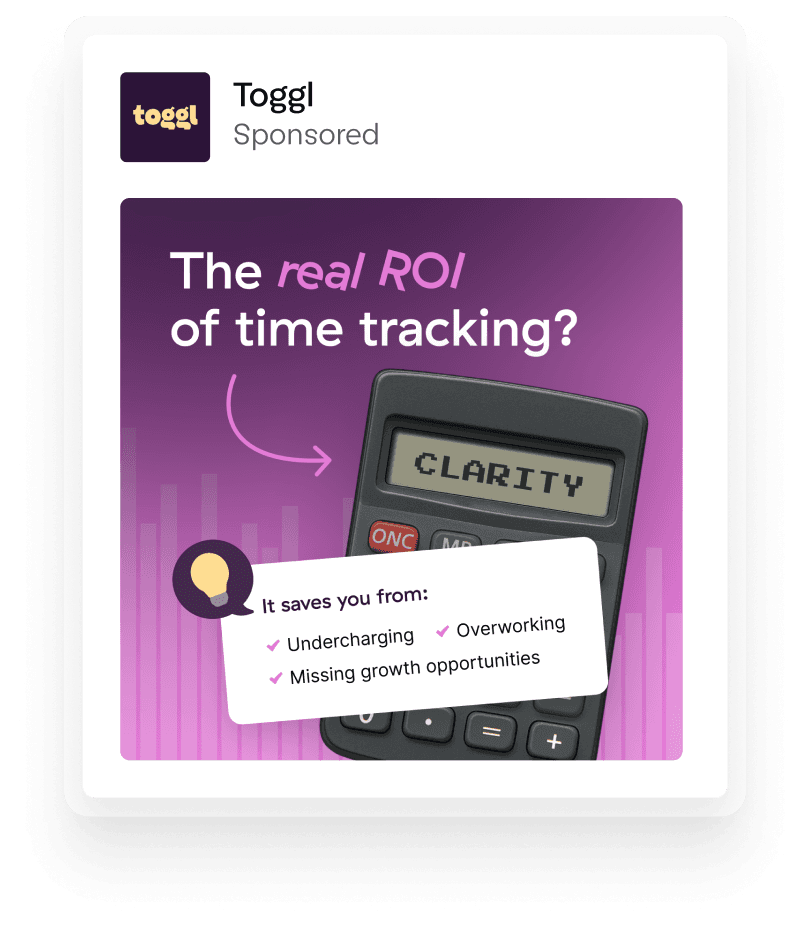
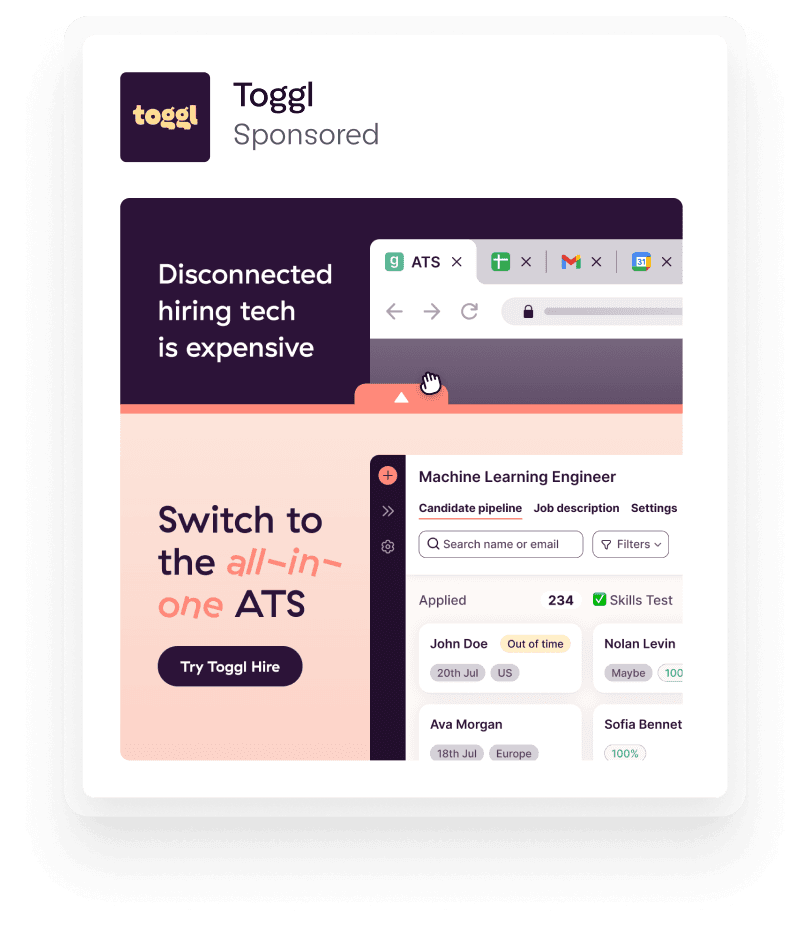
One of Toggl's biggest frustrations was the previous agency's unwillingness to experiment. They wanted a team that would take their brand voice and turn it into something genuinely engaging, not just manage campaigns on autopilot.
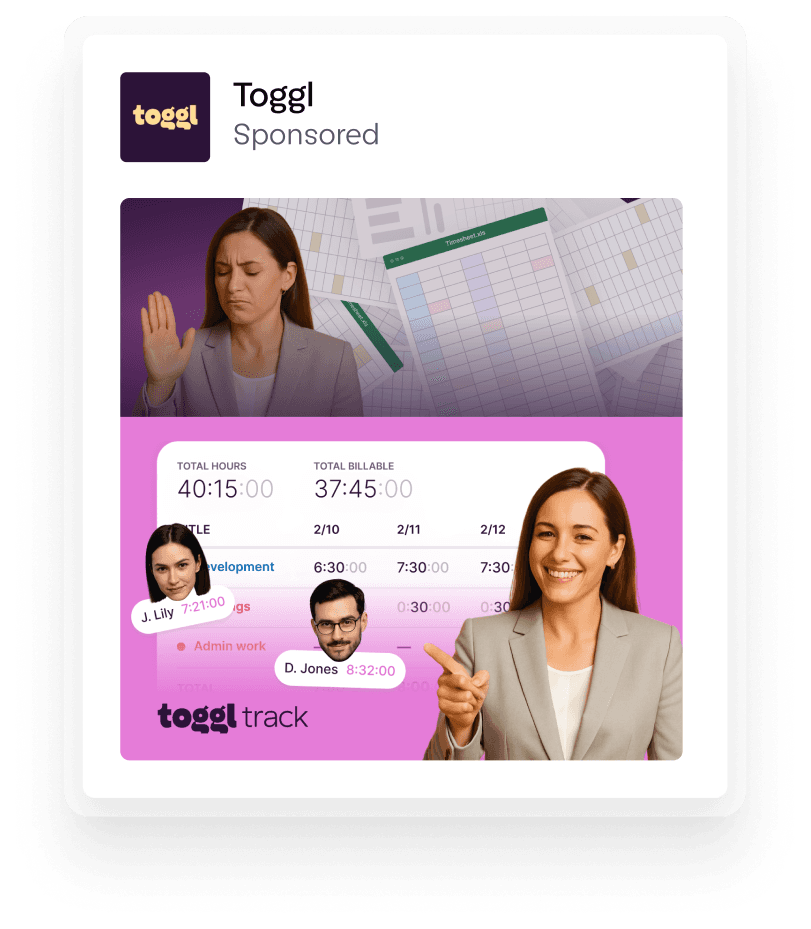
We brought that creative energy. Beyond optimizing Google Search, our team expanded into LinkedIn, Reddit, and YouTube—channels Toggl's previous setup had barely touched.
Elizabeth Thorn
Head of Marketing at Toggl
Collaborative strategy, not spoon-fed execution
With the previous agency, Toggl felt like they had to dictate every move. With us, the dynamic shifted to genuine collaboration.
"I could explain to the team what we wanted to achieve, and they'd come back with ideas about which channel or ad format might work best," Elizabeth explains. "That's the whole point of paying for an agency. You want expertise, not just execution."
Structured processes backed it up. Weekly reports, mid-month decks, organized Slack communication, and a clear review workflow meant nothing fell through the cracks—and Toggl's team could do their part quickly without chasing updates.
Elizabeth Thorn
Head of Marketing at Toggl
Results
Comparing January to August 2025 (with us) against January to August 2024 (with the previous agency), the numbers tell a clear story. Even on a significantly reduced budget.
reduction in ad spend
We worked to minimize wasted budget and brought spend down to $133,881 from $279,863, while improving every efficiency metric that mattered.
LTV: Ad Spend ratio, up from 6.63
A calculation of expected lifetime value of a new customer vs. ad spend to acquire them. A 38% improvement.
increase in closed won deal value
Won deal value rose 2.6x from $34,555 to $89,740. Meaning ads suddenly became a profitable growth channel.
The quality story goes beyond the topline numbers. Of the qualified leads that entered Toggl's sales pipeline in 2025, they closed 100% of them—a dramatic improvement in lead quality driven by tighter targeting and more intentional campaign strategy.
"I was able to send the year-over-year data to our CRO, and his response was clear: paid is obviously a channel that works for us," Elizabeth says. "When it's done right, it works."
The ultimate proof of what we built? Toggl has since brought paid management in-house—not because we weren't delivering, but because the foundation we laid made it possible to justify the investment.
RESULTS