Google Ads dominates most B2B SaaS paid search strategies, but it's not the only platform capable of generating qualified pipeline.
As competition continues to increase across high-value SaaS keywords, marketing teams are looking for additional ways to capture demand and reach buyers who may not convert through Google alone.
This is where Microsoft Ads is gaining traction.
In this guide, we'll break down how B2B SaaS companies can use Microsoft Ads effectively, which campaign types tend to perform best, how Microsoft compares to Google Ads, and how to structure campaigns around the metrics that matter most: pipeline, revenue, and long-term growth.
Why More SaaS Companies Are Taking Microsoft Ads Seriously
For years, Microsoft Ads sat behind Google Ads in most B2B SaaS acquisition strategies.
The platform offered less search volume, received less industry attention, and was viewed as a secondary channel reserved for incremental budget.
That perception is changing.
As competition for commercial SaaS keywords has intensified, customer acquisition costs have increased across many Google Ads accounts. Marketing teams that have already captured the most obvious growth opportunities within Google are left looking for additional sources of qualified demand.
Microsoft Ads has emerged as one of the most practical places to find it.
For B2B SaaS companies, the appeal comes down to a few factors:
Lower competition on many high-intent SaaS keywords
Access to professional and enterprise audiences
Unique LinkedIn profile targeting capabilities
An opportunity to capture additional demand beyond Google Ads
Why Microsoft Ads Work for B2B SaaS
While the platform delivers lower search volume than Google, Microsoft Ads can provide access to high-intent buyers, additional audience-targeting capabilities, and a less competitive advertising environment.
Wide spectrum of advertising: Microsoft ads encompass Microsoft Bing, Yahoo!, DuckDuckGo, Ecosia, AOL and websites on the Microsoft Audience Network, including MSN and Outlook.
Lower competition on high-intent SaaS keywords. Many SaaS categories face intense competition within Google Ads, driving up CPCs and making efficient growth more difficult. Microsoft Ads provides access to similar searches with less auction pressure.
A stronger professional and enterprise audience. Microsoft products remain deeply embedded in many business environments. This gives advertisers access to a large audience of professionals researching software solutions during the workday, particularly within mid-market and enterprise organizations.
LinkedIn profile targeting. Microsoft Ads allows advertisers to layer targeting based on LinkedIn attributes such as company size, industry, and job function. For SaaS companies targeting specific ICPs, this creates opportunities not available in Google Ads search campaigns.
A natural complement to Google Ads. The strongest SaaS PPC programs use Microsoft Ads alongside Google Ads. Google captures the largest share of search demand, while Microsoft helps extend reach and diversify acquisition channels.
The opportunity is clear.
The next question is how to lock down the strategy.
How to Structure a Microsoft Ads Strategy for SaaS Growth
Launching Microsoft Ads is relatively straightforward. Building a strategy that consistently generates pipeline isn’t.
The strongest SaaS accounts are structured around search intent, audience quality, landing page relevance, and revenue-focused measurement. The goal is not simply to generate more leads, but to attract the right buyers and understand which campaigns contribute to pipeline growth.
Segment campaigns by search intent
Search intent should be the foundation of any Microsoft Ads account structure.
Different keywords represent different stages of the buying journey. Someone searching for "crm software" is evaluating solutions, while someone searching for "HubSpot alternatives" is comparing vendors and may be much closer to making a decision.
Separating campaigns by intent allows SaaS marketers to control budgets more effectively, align messaging with buyer needs, and evaluate performance at a more meaningful level.
A common structure includes:
Non-branded category keywords
Competitor keywords
Branded keywords
Customer and remarketing audiences
This level of segmentation creates clearer reporting and provides greater control as campaigns scale.
Use LinkedIn targeting to refine your B2B audience
One of the biggest mistakes SaaS advertisers make is treating Microsoft Ads as a direct copy of Google Ads.
LinkedIn profile targeting provides an opportunity to refine campaigns based on attributes such as company size, industry, and job function.
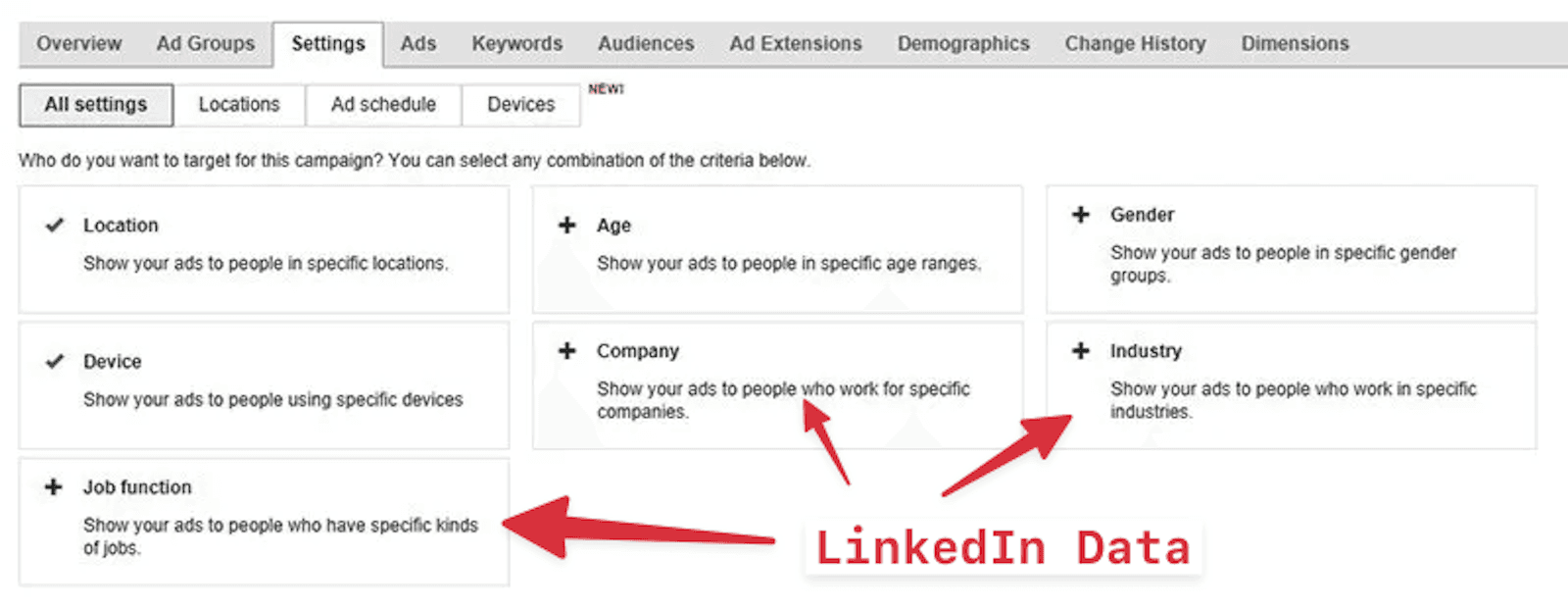
While search intent should remain the primary targeting signal, layering professional audience data can help improve lead quality and strengthen alignment with your ideal customer profile.
Align landing pages with commercial intent
Campaign performance depends on more than keywords and targeting.
Landing pages should reflect the intent behind the search. A user evaluating software options may need comparison-focused messaging, while a branded searcher may be ready to request a demo or product walkthrough.
Strong intent-to-page alignment improves conversion rates and creates a smoother buying experience for prospective customers.
Import Google Ads campaigns carefully
Many SaaS companies begin by importing existing Google Ads campaigns into Microsoft Ads.
This can accelerate setup, but imported campaigns should not be treated as finished campaigns.
Audience behavior, search volume, competition levels, and performance patterns can differ between platforms. Successful advertisers use imports as a starting point and then optimize campaigns specifically for Microsoft's audience and targeting capabilities.
Track pipeline and offline conversions, not just leads
Lead volume alone rarely tells the full story.
A campaign that generates fewer leads may create significantly more pipeline if those leads are better aligned with your target audience.
For SaaS companies with longer sales cycles, importing offline conversion data and tracking opportunities, pipeline, and revenue creates a much clearer picture of performance. This allows teams to optimize campaigns based on business outcomes rather than top-of-funnel metrics.
Microsoft Ads vs Google Ads for SaaS
For most B2B SaaS companies, the decision is not whether to use Google Ads or Microsoft Ads.
The best paid search strategy combines both. That said, each platform has distinct strengths and limitations that influence how budgets should be allocated.
Factor | Google Ads | Microsoft Ads |
Search volume | Highest search volume across most SaaS categories | Lower search volume but meaningful B2B reach |
Competition | Highly competitive in many SaaS verticals | Less auction pressure |
CPCs | Higher for commercial SaaS terms | Lower for comparable keywords |
Audience reach | Broad consumer and business audience | Strong professional and enterprise audience |
Targeting capabilities | Extensive audience targeting | Includes LinkedIn profile targeting |
Scalability | Larger overall growth potential | Strong supplementary growth channel |
Intent strength | Excellent for capturing active demand | Similar intent signals with lower volume |
Attribution impact | Drives the largest share of pipeline | Can improve efficiency and incremental pipeline generation |
How Hey Digital Uses Microsoft Ads to Drive SaaS Pipeline Growth
Having supported more than 200 B2B SaaS companies across paid acquisition channels, we've found that Microsoft Ads performs best when integrated into a broader search strategy rather than managed in isolation.
For most SaaS businesses, Microsoft Ads complements Google Ads by helping capture additional high-intent demand, improve efficiency on competitive keywords, and expand reach among professional audiences.
At Hey Digital, we use Microsoft Ads as part of our B2B Ads Arsenal to:
Capture incremental pipeline beyond Google Ads
Improve efficiency on competitive SaaS keywords
Reach specific B2B audiences using LinkedIn targeting
Strengthen branded and competitor search coverage
Support demand generation across longer buying journeys
The role Microsoft Ads plays within an acquisition strategy will vary, but the objective remains consistent: generating qualified pipeline and revenue growth.
This is why measurement matters.
Rather than evaluating Microsoft Ads based solely on leads, we focus on metrics that reflect commercial impact, including qualified pipeline, sales opportunities, customer acquisition costs, and revenue contribution.
Microsoft Ads may represent a smaller share of overall search volume, but it should be viewed as an important source of incremental pipeline when managed alongside a broader paid acquisition strategy.
Ready to integrate Microsoft Advertising into your PPC strategy? Reach out to us today to see how we can help you.

CEO @ Hey Digital
About the author
Dylan Hey is the CEO and co-founder of Hey Digital and Hey Design, where he helps SaaS companies scale through performance marketing and creative strategy. He has built a globally distributed agency working with 200+ SaaS brands.
View LinkedIn
Blog